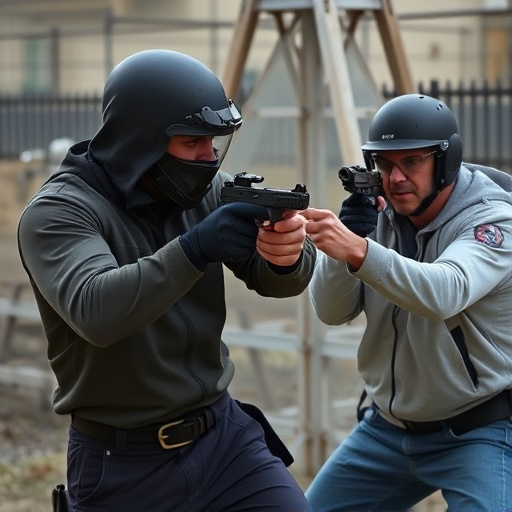
Professional security guards deploy stun guns, electronic control devices (ECDs), as non-lethal self-defense in high-risk scenarios. Trained to maximize effectiveness while minimizing risks, they use proper techniques for safe deployment over various ranges and power levels. Stun guns serve as valuable deterrents and defense against aggression without causing permanent harm, adhering to legal and ethical guidelines that vary by jurisdiction. Continuous education ensures informed decision-making and responsible stun gun culture.
“Uncover the power and effectiveness of stun guns through a comprehensive exploration. From understanding their basic mechanics to real-world applications, this article delves into the essential aspects of these non-lethal weapons. Professional security guards play a pivotal role in deploying stun guns effectively, utilizing advanced training techniques for optimal results. We’ll examine range, power, and safety considerations, while also navigating legal and ethical use guidelines, ensuring responsible stun gun implementation.”
- Understanding Stun Guns: Basic Mechanics and Functionality
- Professional Security Guard Training: Stun Gun Deployment Techniques
- Effectiveness Factors: Range, Power, and Safety Considerations
- Real-World Applications: Scenarios Where Stun Guns Prove Vital
- Legal Aspects and Ethical Use: Navigating Regulations and Responsibilities
Understanding Stun Guns: Basic Mechanics and Functionality
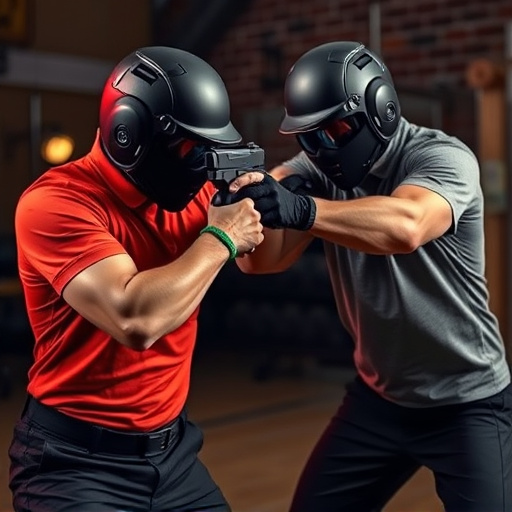
Stun guns, also known as electronic control devices (ECDs), are non-lethal weapons designed to temporarily incapacitate a target through electrical impulsification. They work by delivering a strong electric current through two prongs or probes that make contact with the subject’s body. This sudden jolt disrupts nerve signals and muscle control, causing the individual to experience muscle spasms, disorientation, and temporary paralysis.
Professional security guards often rely on stun guns as a safer alternative to firearms for self-defense in high-risk situations. The basic mechanics involve a battery-powered electrical circuit that generates a high-voltage, low-amperage pulse. When activated, this pulse travels through the probes, which must make secure contact with the target’s body to ensure effectiveness. Proper usage requires training and an understanding of the device’s range, safety features, and potential side effects to maximize its stun gun’s effectiveness in de-escalating dangerous encounters.
Professional Security Guard Training: Stun Gun Deployment Techniques
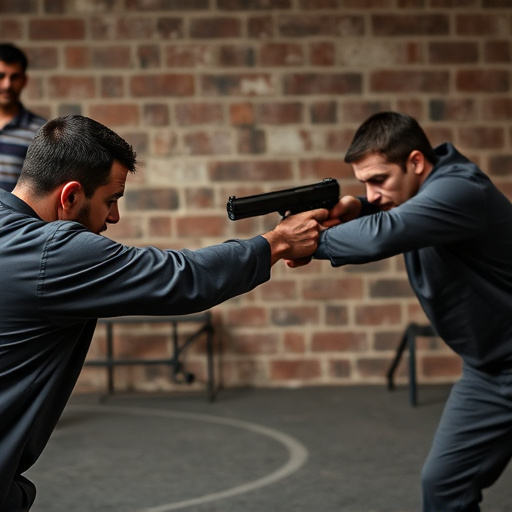
Professional security guards are often equipped with stun guns as a powerful tool for self-defense and crowd control. Their training in stun gun deployment techniques is comprehensive, focusing on maximizing the weapon’s effectiveness while minimizing risks. This specialized training covers various scenarios, from close-range encounters to long-distance deterrence, ensuring guards can handle diverse situations with precision.
Instructors emphasize proper grip, aiming, and trigger pull to guarantee accurate shots. They also teach de-escalation tactics, crucial for diffusing volatile situations without resorting to excessive force. Moreover, professional security guard training includes practicing on realistic mannequins and simulated environments, allowing them to develop quick reflexes and confident handling of stun guns in high-pressure scenarios.
Effectiveness Factors: Range, Power, and Safety Considerations
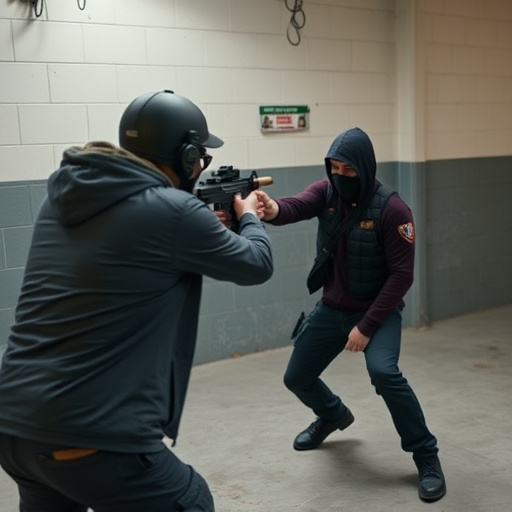
The effectiveness of a stun gun, especially for professional security guards, lies in its ability to incapacitate an assailant quickly and safely. Several key factors determine its success. Firstly, range plays a significant role; a longer range allows guards to disable attackers from a safer distance, reducing the risk of physical confrontation. This is crucial for professionals who need to de-escalate situations without endangering themselves or others.
Secondly, power is essential but must be balanced with safety considerations. Higher voltage can deliver a more powerful shock, but it also increases the risk of secondary injuries, especially in crowded or sensitive environments. Professional security guard stun guns are designed to provide enough power for effective neutralization while minimizing harm, ensuring that force is used as a last resort and proportionate to the threat.
Real-World Applications: Scenarios Where Stun Guns Prove Vital
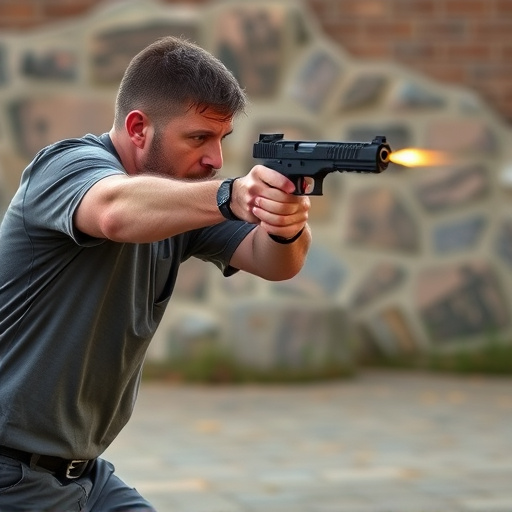
In real-world applications, stun guns have proven to be invaluable tools in various scenarios, particularly for professional security guards. Their effectiveness lies in the ability to incapacitate an aggressor temporarily, allowing guards to gain control and de-escalate potentially dangerous situations. Whether it’s a physical altercation, a robbery attempt, or a hostile individual, stun guns offer a non-lethal solution that can neutralize the threat without causing permanent harm.
For security guards operating in high-risk environments, such as crowded events, financial institutions, or remote areas, stun guns serve as a crucial deterrent and defense mechanism. These devices enable guards to respond swiftly and with minimal force, ensuring public safety while adhering to ethical guidelines that promote the responsible use of force. The reliability and ease of deployment of professional-grade stun guns make them essential equipment for maintaining order and protecting individuals in diverse real-world settings.
Legal Aspects and Ethical Use: Navigating Regulations and Responsibilities
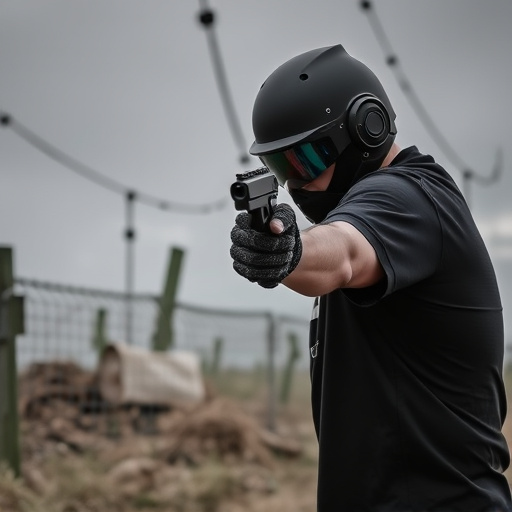
The legal landscape surrounding stun guns varies widely, and it’s crucial for anyone considering their use to understand the regulations in their jurisdiction. Professional security guards who carry stun guns must be well-versed in local laws, which can dictate issues like age restrictions, need-to-resist requirements, and acceptable places of deployment. Ethical considerations also play a significant role; the responsible use of stun guns involves understanding when it’s appropriate to deploy them, ensuring minimal harm to bystanders, and adhering to de-escalation protocols.
Navigating these regulations requires ongoing education and adaptation. Security guard training programs should cover legal updates and ethical guidelines, empowering professionals to make informed decisions in the field. Moreover, open dialogue between security companies, law enforcement, and regulatory bodies is essential for fostering a responsible stun gun culture. This collaborative approach ensures that professional security guards have the tools and knowledge needed to use stun guns effectively while upholding the law and maintaining public safety.
Stun guns have emerged as a powerful tool for professional security guards, offering a non-lethal means to incapacitate individuals in various high-risk situations. As this article has explored, understanding the mechanics, proper training, and strategic deployment of stun guns are key to maximizing their effectiveness. By considering factors like range, power, and safety, as well as real-world applications and legal considerations, security professionals can harness the potential of stun guns responsibly and ethically. When utilized appropriately, stun guns can be a game-changer in securing venues and protecting individuals, ensuring public safety remains a top priority.